
October 28, 2024
Patterson Belknap Attorney Served as
Independent Examiner in FTX Bankruptcy Case
Firm Serves as Counsel to the Examiner
Independent Examiner in FTX Bankruptcy Case
Firm Serves as Counsel to the Examiner

We have previously blogged about the section 546(e) defense to a trustee’s avoidance powers under the Bankruptcy Code. A trustee has broad powers to set aside certain transfers made by debtors before bankruptcy. See 11 U.S.C. §§ 544, 547, 548. Section 546(e), however, bars avoiding certain transfers, including a “settlement payment . . . made by or to (or for the benefit of) . . . a financial institution [or] a transfer made by or to (or for the benefit of) a . . . financial institution . . . in connection with a securities contract.” 11 U.S.C. § 546(e). The applicability of section 546(e) can thus hinge on what qualifies as a “financial institution.” The Bankruptcy Code’s definition of “financial institution” is counterintuitive: it includes not only certain institutions that fall within the colloquial understanding of “financial institution” (“a Federal reserve bank, or an entity that is a commercial or savings bank, industrial savings bank, savings and loan association, trust company, federally-insured credit union, or receiver, liquidating agent, or conservator for such entity”), but also a customer of such institutions “when” such institutions are “acting as agent or custodian for [such] customer . . . in connection with a securities contract.” 11 U.S.C. § 101(22)(A).
In In re Tribune Co. Fraudulent Conveyance Litigation, 946 F.3d 66 (2d Cir. 2019) (“Tribune”), the Second Circuit held that this definition extended to Tribune Co. with respect to Tribune’s payments to shareholders in connection with a merger, because Tribune was a “customer” of a financial institution, and that institution served as Tribune’s agent for the payments. As such, the Second Circuit held that the payments were protected from avoidance by the safe harbor.
The precise scope of Tribune remains in question. For purposes of section 546(e), what does it mean for a financial institution to be “acting as agent” for a customer? And when a financial institution is acting as an agent for a customer, rendering the customer itself a financial institution for section 546(e) purposes, how broadly does that classification extend? These issues are addressed in a recent Second Circuit decision on section 546(e), In re Nine West Holdings Inc., __ F.4th __, 2023 U.S. App. LEXIS 31258 (2d Cir. Nov. 27, 2023).
The case arose from a leveraged buyout of the apparel company Jones Group, Inc. (“Jones Group”) by the private equity firm Sycamore Partners (“Sycamore”), and the subsequent bankruptcy of the surviving company Nine West Holdings, Inc. (“Nine West”). Because the court’s decision turned on the facts of the merger, we provide a summary of the key facts as the court described them. To effectuate the merger, Sycamore created Jasper Parent LLC (“Jasper Parent”) and Jasper Merger Sub, Inc. (“Jasper Merger Sub”), a wholly owned subsidiary of Jasper Parent. On December 19, 2013, Jasper Parent, Jasper Merger Sub, and Jones Group entered into the Merger Agreement, under which Jones Group merged with Jasper Merger Sub, leaving Jones Group (later Nine West) as the survivor. The Merger Agreement provided for a “paying agent” to be hired to make payments to the public shareholders, and also provided that Jasper Parent would deposit the merger consideration with the paying agent. Jasper Parent and Jones Group hired Wells Fargo to act as the paying agent and entered into the Paying Agent Agreement (“PAA”) with it. The PAA specified that the paying agent would act as Jones Group’s “special agent” for distributing the merger consideration and outlined the payment mechanics in detail. The Merger Agreement also provided for payments to Jones Group’s former directors, officers, and employees for their restricted shares, share-equivalent units, and accumulated dividends, which were to be made through payroll and other means.
In April 2018, Nine West filed for bankruptcy. A plan was confirmed in February 2019. In February 2020, the Litigation Trustee for the Nine West Litigation Trust and the Indenture Trustee for certain notes issued by Nine West brought 17 actions against Jones Group’s former directors and officers for unjust enrichment, and against its former public shareholders for fraudulent conveyance. The public shareholders and the directors and officers moved to dismiss on the basis that the transfers to them were shielded by the section 546(e) safe harbor. The district court granted both motions and Plaintiffs appealed.
The Second Circuit affirmed in part and reversed in part. First, the Second Circuit held that whether Nine West qualified as a “financial institution” for purposes of section 546(e) was properly analyzed on a transfer-by-transfer basis rather than a contract-by-contract basis. For an entity to qualify as a financial institution by virtue of a financial institution serving as its agent, the Second Circuit held that agency relationship must pertain to the transaction at issue. To justify that requirement, the Second Circuit pointed to the statutory text, which provides that customers qualify as financial institutions “when” a bank is acting as its agent, and to the principle that courts should interpret statutes to avoid absurd results, reasoning that a contrary interpretation would mean that every transfer in connection with an LBO would be shielded as long as at least one such transfer involved a bank serving as agent. The Second Circuit also reasoned that a more expansive interpretation of the safe harbor would undermine the avoidance powers critical to the Bankruptcy Code and would shield transfers unrelated to Congress’s purpose of protecting the stability of the financial system.
Second, based on this framework, the Second Circuit held that Nine West qualified as a financial institution as to the transfers to the public shareholders, but not as to the transfers to the directors and officers. As to the transfers to the public shareholders, the Second Circuit held that Wells Fargo acted as Nine West’s agent, rendering Nine West a financial institution for 546(e) purposes. As to the transfers to the directors and officers, however, the Second Circuit rejected certain defendants’ arguments that Wells Fargo had a role in cancelling certain restricted shares and, as such, was Nine West’s “agent” as to those transfers as well. The Second Circuit noted that the factual record was unclear, but even if Wells Fargo had a ministerial role in cancelling the shares, the court held that this was insufficient for Wells Fargo to be an agent, since Nine West did not exercise control over Wells Fargo for this role. In reaching this conclusion, the Second Circuit emphasized that a further expansion of section 546(e)’s scope would not fulfill Congress’s purpose.
Third, the Second Circuit briefly rejected Plaintiffs’ argument that the safe harbor did not apply because the Merger Agreement was not a “securities contract,” relying on the expansive statutory definition of “securities contract” and noting that the payments were also “settlement payments.”
Judge Sullivan dissented. He argued that, based on the “connection with a securities contract” language in section 546(e) and in the statutory definition of “financial institution,” the contract-by-contract approach was the appropriate one, and all the transfers at issue were safe harbored.
This article originally appeared on Law360.
The uptick in bankruptcy cases will mean more work for insolvency professionals who specialize in asset tracing. Some of the most interesting work will arise in cases where companies engaged in significant fraud.
Each bankruptcy cycle has these cases. In 2001, Enron Corp. filed for bankruptcy. In 2008, there was Bernie Madoff. The latest example is FTX Trading Ltd.
But scores of less headline-grabbing cases will also require asset tracing. The work will be needed not just when there's intentional fraud, but also when constructive fraud and preferential transfers are present.
A big challenge for plaintiffs — debtors and post-confirmation liquidating trustees — can occur after a transfer is found to be voidable. It can be hard to locate, determine ownership of, and recover assets.
In the typical situation, a defendant receives funds from a debtor prepetition, commingles the money in one or more accounts, and transfers some amount of the funds to another person or entity.
Five common asset tracing rules that experts and courts use are the lowest intermediate balance rule, the restated tracing rules, last-in and first-out, first-in and first-out, and the pro rata method.
The lowest intermediate balance rule dates from English common law and was first recognized by the U.S. Supreme Court in Cunningham v. Brown in 1924.[1]
This rule assumes that the "secured funds deposited into a commingled bank account are the last funds disbursed from that account, and any disbursements made from the account are taken first from funds other than the ... secured funds until the balance in the account dips below the amount of those ... secured funds."[2]
As the U.S. Court of Appeals for the Fourth Circuit explained in United States v. Miller in 2018,
The lowest intermediate balance rule originated in trust law as a rule to determine the rights of a trust beneficiary to a trustee's bank account where the trust funds and the trustee's personal funds are commingled. In this regard, the Rule assumes that the funds at issue remain in the account and are available to be traced provided that the balance does not fall below the amount of the disputed funds. In the event that the balance of the account dips below the amount of funds at issue, the funds at issue abate accordingly.[4]
Less often cited in bankruptcy cases are the restated tracing rules. These provide that when "property of the claimant has been commingled by a recipient who is a conscious wrongdoer. Withdrawals that yield a traceable product and withdraws that are dissipated are marshaled so far as possible in favor of the claimant."
When an innocent recipient commingles the property, "restitution from property so identified may not exceed the amount for which the recipient is liable by [other rules.]"[5]
Last-in, first-out is the presumption that the last finds deposited into an account are the first to be withdrawn. This method is sometimes used as an alternative to the lowest intermediate balance rule.
First-in, first-out is the presumption that the first funds deposited into an account are the first to be withdrawn. Like last-in, first-out, this method is also an alternative to the lowest intermediate balance rule.
The pro rata methodology presumes that each claimant is entitled to a portion of commingled funds based on its percentage contribution to the account. This method lacks the timing element for deposits and withdraws that is present in the other methodologies.
According to the U.S. Court of Appeals for the Tenth Circuit's ruling in United States v. Henshaw in 2004, "courts exercise case-specific judgment to select the [tracing] method best suited to achieve a fair and equitable result on the facts before them."[6]
Bankruptcy courts "have broad discretion to determine which monies of commingled funds derive from fraudulent sources."[7]
As noted above, the lowest intermediate balance rule is widely utilized by experts and often cited in bankruptcy decisions. The November opinion from the Health Diagnostic Laboratory Inc.'s bankruptcy in the U.S. Bankruptcy Court for the Eastern District of Virginia demonstrates how the lowest intermediate balance rule is applied.
In that case, the debtor sold test strips that provided early detection of cardiovascular disease, diabetes and more. The company and affiliates filed for Chapter 11 in 2015. The liquidating trustee brought multiple Chapter 5 avoidance actions.
One adversary proceeding concerned funds that HDL transferred to Bradford Johnson as an initial transferee. Johnson was a principal and sales agent of HDL's marketing consultant, BlueWave Healthcare Consultants Inc.
The trustee obtained a judgment against BlueWave of just over $220 million. The court in HDL referred to this amount as the avoided transfers.
In 2018, Johnson and several of his business entities filed for bankruptcy in Alabama, a filing that stayed the trustee's lawsuit against him.
But Johnson had used funds he received from HDL to make charitable contributions to First United Methodist Church Centre, Alabama. The trustee pursued recovery against the defendant.
The trustee and the defendant stipulated that Johnson had received $1,719,200.61 in transfers from HDL. The HDL decision referred to those funds as the avoidable transfers.
As noted above, the trustee could not pursue recovery from Johnson given the automatic stay in his bankruptcy case, and thus the transfers of these funds were avoidable but could not be avoided.
The evidence at trial showed that $1,085,000 that had been transferred from HDL to Johnson were sent as donations from Johnson to the defendant from four commingled accounts, including a BlueWave account.
The question before the court was how much of what was transferred to the defendant from the commingled accounts was part of the avoided transfers and the avoidable transfers.
In other words, not necessarily all funds that Johnson had sent the defendant were subject to Chapter 5 recovery, even if Johnson had initially received those and other funds from HDL.
The trustee's expert examined all the inflows and outflows concerning those accounts on a transaction-by-transaction basis. Millions of dollars had moved in, out of, and between the accounts. A complicating factor was that the accounts included funds from sources other than HDL.
To trace the transfers from those accounts to the defendant, the expert relied primarily on the lowest intermediate balance rule method, but also utilized the restated tracing rules.
The assumption under the lowest intermediate balance rule was that all non-HDL funds in the commingled accounts were deemed to have been transferred out before disbursement of the funds from HDL.
Applying the lowest intermediate balance rule, the evidence showed that of the total $1,085,000 transferred to the defendant from the four commingled accounts, $569,435 could be traced directly to the avoided transfers and the avoidable transfers.
The other transfers were not subject to the trustee's avoiding powers. As a result, the court entered judgment in favor of the liquidating trustee and against the defendant for $569,435.
The decision shows how an expert can make sense of a complicated situation. Millions of dollars of funds entered accounts from multiple sources, and funds also moved between those accounts.
Certain transfers from HDL through those accounts and to the defendant were subject to clawback under federal and state law.
Use of the lowest intermediate balance rule in this case enabled the expert to identify the subset of transfers that the liquidating trustee could seek to recover for the beneficiaries of the trust.
[1] Cunningham v. Brown, 265 U.S. 1 (1924).
[2] Health Diagnostic Laboratory, Inc., No. 22-03023, 2023 Bankr. LEXIS 2721, at *10 (Bankr. E.D. Va. Nov. 9, 2023).
[3] Id. at *14-15.
[4] United States v. Miller, 295 F. Supp. 3d 690, 703-04 (E.D. Va. 2018), aff'd, 911 F.3d 229 (4th Cir. 2018).
[5] Id. § 59(3).
[6] United States v. Henshaw, 388 F.3d 738, 741 (10th Cir. 2004).
[7] Picard v. Charles Ellerin Revocable Tr. (In re Bernard L. Madoff Inc. Sec. LLC), No. 08-01789 (BRL), 2012 Bankr. LEXIS 1099, at *8 n.7 (Bankr. S.D.N.Y. 2011).
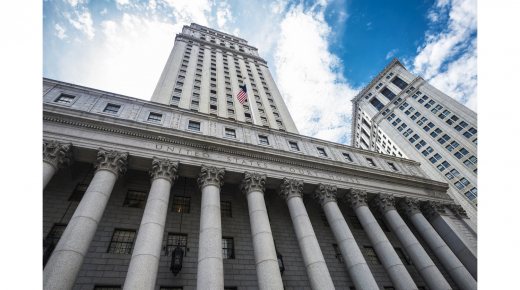
After years of litigation involving state, federal, Irish, and (to a lesser extent) Swiss law; transfers of numerous assets, including Ireland’s priciest-personal residence; a jury trial; and extensive post-trial briefing, the Second Circuit made short shrift of a former real estate mogul and his ex-wife’s appeal of a judgment rendered against them for fraudulent conveyances.
Once called the “Baron of Ballsbridge” for his development projects in Ballsbridge, Ireland, Sean Dunne’s real estate empire fell apart after the 2008 financial crisis. Unable to pay debts he personally secured, Dunne and an entity related to the Irish government, National Asset Loan Management, Ltd. (“NALM”), reached an agreement in which Dunne agreed to pay NALM about $235 million. U.S. litigation began in 2012, when NALM sued Dunne, his ex-wife (Gayle Killilea), and various corporate entities in Connecticut state court for fraudulent transfers of Dunne’s assets to Killilea and others. Coan v. Dunne, No. 21-2012, 2023 WL 7103275, at *1 (2d Cir. Oct. 27, 2023).
In 2013, Dunne filed for bankruptcy in the District of Connecticut. The bankruptcy trustee then intervened in the state-court action brought by NALM and removed it to the federal district court. The trustee also initiated adversary proceedings based on Dunne’s allegedly fraudulent transfers, and those proceedings were consolidated in the District of Connecticut with the action brought by NALM.
After years of litigating, the district court oversaw a jury trial in 2021 regarding the allegedly fraudulent transfers leading up to Dunne’s bankruptcy. Of particular note was a property known as “the Walford,” purchased by Dunne in 2005 for €58 million, making it Ireland’s most expensive house. Dunne argued that he did not own the Walford at the time of the allegedly fraudulent transfer, as he placed it into trust for Killilea in 2005. Dunne made similar arguments as to the propriety of various other challenged transfers, including that they were required by a 2005 post-nuptial agreement and a Swiss court’s order on the same.
The jury returned a split verdict but found against Dunne and Killilea on various transfers (including of the Walford) under U.S. and Irish law. Dunne and Killilea challenged the verdict on several grounds, including based on a decision entered by the Irish High Court shortly after the jury returned a verdict. In a dispute between Irish tax authorities and Yesreb Holding Limited (“Yesreb”), a Cypriot entity to which the Walford was transferred, the Irish court found that “Dunne ceased to have any interest in the Walford as of 9 October 2006” and instead had “entered into a contract . . . (purporting to be a trustee for Killilea) with Yesreb for the sale of Walford.” Id. at *2 (cleaned up).
Neither the Irish High Court’s decision nor Dunne and Killilea’s other arguments were enough for the district court to overturn the jury’s findings. Specifically as to the preclusive effect of the Irish court’s order, the district court agreed with the trustee’s argument that “the fact that the Irish High Court reached a [different] conclusion . . . , based on different evidence, involving different parties and concerning different legal issues does not evidence a conflict between Irish and U.S. law or implicate comity.” Coan v. Dunne, 3:15-cv-00050, 2021 WL 3012678, at *16 (D. Conn. July 15, 2021). The court continued that “the principles of comity do not require U.S. courts to negate their own findings or judgments simply because an unhappy litigant is able to secure a later conflicting finding or judgment from a tribunal somewhere else in the world.” Id.
Thus, despite the complex web of transactions, litigation, and entities spanning the globe, the district court found that the jury appropriately rendered a verdict in accordance with the law and the evidence before it. Thus, it ordered Killilea to pay the bankruptcy trustee €19,172,935.60 and $278,297.18. See id. at *35 (denying Dunne’s motion for post-verdict relief); Coan v. Dunne, 3:15-cv-00050 (JAM), 2022 WL 369012, at *7 (D. Conn. Feb. 8, 2022) (denying Killilea’s post-trial motion).
The Second Circuit had little difficulty affirming. After laying out the history of the case and its standard of review, the court’s analysis was simple: “After an independent review of the record and the applicable law, we affirm the judgment entered in the case for substantially the same reasons as those set forth by the district court in its thorough and exceptionally well-reasoned rulings on Dunne’s and Killilea’s post-trial motions.” Coan, 2023 WL 7103275, at *3 (2d Cir. Oct. 27, 2023).
* * *
An endnote for the architecturally or historically curious. Since litigation began, Yesreb sold the Walford property to Dermot Desmond (the billionaire owner of Celtic F.C.) for €14.25 million, a 75% discount from Dunne’s 2005 purchase. The century-old house was subsequently demolished and replaced with a 17,000 square foot mansion “similar to that of a Palladian villa.”

The attorneys in Patterson Belknap‘s Business Reorganization and Creditors' Rights practice group offer our clients a broad array of experience and skills managing, mitigating, and monetizing every kind of financial distress. Our clients include indenture trustees, banks, creditors’ committees, examiners, developers, manufacturers, licensors, and other businesses, partnerships, individuals, and foreign and domestic government agencies. We assist them in bankruptcy matters, bankruptcy-related litigation, out-of-court workouts, and many other special situations.
Bankruptcy Proceedings
Patterson Belknap plays a variety of roles in hundreds of bankruptcy cases nationwide. We represent secured and unsecured creditors, landlords and tenants, creditors’ committees and court-appointed trustees in corporate reorganizations under Chapter 11 of the Bankruptcy Code, liquidations under Chapter 7, cross-border proceedings under Chapter 15, and municipal bankruptcy cases under Chapter 9. A few examples of the Firm’s diverse work include:
Financial Distress Outside of Bankruptcy: Workouts, Acquisitions and Troubled Loans
Patterson Belknap regularly represents parties engaging in transactions (particularly financings, purchases and sales, and franchising) with distressed companies outside of and prior to the commencement of a bankruptcy case. The firm offers advice on structuring transactions to avoid or minimize risks resulting from the subsequent insolvency or bankruptcy of the distressed party. Patterson Belknap also represents secured lenders and borrowers in connection with the restructuring of lending arrangements involving financially illiquid or distressed companies. Some examples include:
Multidisciplinary Approach
Financial distress, insolvency and bankruptcy can occur in every sector, in different economic climates, and anywhere in the world. So our diverse nationwide and international practice spans a broad range of industries in foreign and domestic jurisdictions around the world. The attorneys in Patterson Belknap‘s Business Reorganization and Creditors' Rights practice group are able to provide efficient service without sacrificing the resources of a larger firm: we regularly partner with colleagues who focus on litigation, internal investigations, real estate, and tax, to provide our clients with the full panoply of services required to mitigate and manage the risks associated with financial distress.
Litigation
Patterson Belknap is particularly known for its active and effective litigation in bankruptcy court. It represents several major corporations in preference and related bankruptcy litigation on a coast-to-coast basis, but concentrates in handling complex litigation arising from bankruptcy cases. Noteworthy matters include:
Investigations
Patterson Belknap, well known for its investigative work, serves a substantial number of financial institutions and major corporations with sensitive internal and external matters requiring independent scrutiny. This work extends into the bankruptcy and debtor-creditor area. The firm’s attorneys have frequently been called upon to perform investigations and to act swiftly to maximize recovery on behalf of creditors, creditors’ committees or trustees in bankruptcies and workout cases involving allegations of fraud and embezzlement. Representative matters include:
Real Estate
Patterson Belknap’s debtor-creditor practice often comes together with the firm’s Real Estate practice to assist landlords, lenders, developers and others in efforts to restructure troubled real estate projects. The firm also handles foreclosure and related bankruptcy litigation. Some noteworthy matters include:
Pro Bono
Finally, like all of Patterson Belknap’s lawyers, the attorneys in the Business Reorganization and Creditors' Rights practice group take seriously their commitment to providing pro bono legal services. By partnering with legal service organizations throughout New York, the firm regularly serves low-income and indigent clients who might not otherwise have access to high quality legal representation. Recent matters include: