

October 28, 2024
Patterson Belknap Attorney Served as
Independent Examiner in FTX Bankruptcy Case
Firm Serves as Counsel to the Examiner
Independent Examiner in FTX Bankruptcy Case
Firm Serves as Counsel to the Examiner

This article originally appeared on Law360.
The uptick in bankruptcy cases will mean more work for insolvency professionals who specialize in asset tracing. Some of the most interesting work will arise in cases where companies engaged in significant fraud.
Each bankruptcy cycle has these cases. In 2001, Enron Corp. filed for bankruptcy. In 2008, there was Bernie Madoff. The latest example is FTX Trading Ltd.
But scores of less headline-grabbing cases will also require asset tracing. The work will be needed not just when there's intentional fraud, but also when constructive fraud and preferential transfers are present.
A big challenge for plaintiffs — debtors and post-confirmation liquidating trustees — can occur after a transfer is found to be voidable. It can be hard to locate, determine ownership of, and recover assets.
In the typical situation, a defendant receives funds from a debtor prepetition, commingles the money in one or more accounts, and transfers some amount of the funds to another person or entity.
Five common asset tracing rules that experts and courts use are the lowest intermediate balance rule, the restated tracing rules, last-in and first-out, first-in and first-out, and the pro rata method.
The lowest intermediate balance rule dates from English common law and was first recognized by the U.S. Supreme Court in Cunningham v. Brown in 1924.[1]
This rule assumes that the "secured funds deposited into a commingled bank account are the last funds disbursed from that account, and any disbursements made from the account are taken first from funds other than the ... secured funds until the balance in the account dips below the amount of those ... secured funds."[2]
As the U.S. Court of Appeals for the Fourth Circuit explained in United States v. Miller in 2018,
The lowest intermediate balance rule originated in trust law as a rule to determine the rights of a trust beneficiary to a trustee's bank account where the trust funds and the trustee's personal funds are commingled. In this regard, the Rule assumes that the funds at issue remain in the account and are available to be traced provided that the balance does not fall below the amount of the disputed funds. In the event that the balance of the account dips below the amount of funds at issue, the funds at issue abate accordingly.[4]
Less often cited in bankruptcy cases are the restated tracing rules. These provide that when "property of the claimant has been commingled by a recipient who is a conscious wrongdoer. Withdrawals that yield a traceable product and withdraws that are dissipated are marshaled so far as possible in favor of the claimant."
When an innocent recipient commingles the property, "restitution from property so identified may not exceed the amount for which the recipient is liable by [other rules.]"[5]
Last-in, first-out is the presumption that the last finds deposited into an account are the first to be withdrawn. This method is sometimes used as an alternative to the lowest intermediate balance rule.
First-in, first-out is the presumption that the first funds deposited into an account are the first to be withdrawn. Like last-in, first-out, this method is also an alternative to the lowest intermediate balance rule.
The pro rata methodology presumes that each claimant is entitled to a portion of commingled funds based on its percentage contribution to the account. This method lacks the timing element for deposits and withdraws that is present in the other methodologies.
According to the U.S. Court of Appeals for the Tenth Circuit's ruling in United States v. Henshaw in 2004, "courts exercise case-specific judgment to select the [tracing] method best suited to achieve a fair and equitable result on the facts before them."[6]
Bankruptcy courts "have broad discretion to determine which monies of commingled funds derive from fraudulent sources."[7]
As noted above, the lowest intermediate balance rule is widely utilized by experts and often cited in bankruptcy decisions. The November opinion from the Health Diagnostic Laboratory Inc.'s bankruptcy in the U.S. Bankruptcy Court for the Eastern District of Virginia demonstrates how the lowest intermediate balance rule is applied.
In that case, the debtor sold test strips that provided early detection of cardiovascular disease, diabetes and more. The company and affiliates filed for Chapter 11 in 2015. The liquidating trustee brought multiple Chapter 5 avoidance actions.
One adversary proceeding concerned funds that HDL transferred to Bradford Johnson as an initial transferee. Johnson was a principal and sales agent of HDL's marketing consultant, BlueWave Healthcare Consultants Inc.
The trustee obtained a judgment against BlueWave of just over $220 million. The court in HDL referred to this amount as the avoided transfers.
In 2018, Johnson and several of his business entities filed for bankruptcy in Alabama, a filing that stayed the trustee's lawsuit against him.
But Johnson had used funds he received from HDL to make charitable contributions to First United Methodist Church Centre, Alabama. The trustee pursued recovery against the defendant.
The trustee and the defendant stipulated that Johnson had received $1,719,200.61 in transfers from HDL. The HDL decision referred to those funds as the avoidable transfers.
As noted above, the trustee could not pursue recovery from Johnson given the automatic stay in his bankruptcy case, and thus the transfers of these funds were avoidable but could not be avoided.
The evidence at trial showed that $1,085,000 that had been transferred from HDL to Johnson were sent as donations from Johnson to the defendant from four commingled accounts, including a BlueWave account.
The question before the court was how much of what was transferred to the defendant from the commingled accounts was part of the avoided transfers and the avoidable transfers.
In other words, not necessarily all funds that Johnson had sent the defendant were subject to Chapter 5 recovery, even if Johnson had initially received those and other funds from HDL.
The trustee's expert examined all the inflows and outflows concerning those accounts on a transaction-by-transaction basis. Millions of dollars had moved in, out of, and between the accounts. A complicating factor was that the accounts included funds from sources other than HDL.
To trace the transfers from those accounts to the defendant, the expert relied primarily on the lowest intermediate balance rule method, but also utilized the restated tracing rules.
The assumption under the lowest intermediate balance rule was that all non-HDL funds in the commingled accounts were deemed to have been transferred out before disbursement of the funds from HDL.
Applying the lowest intermediate balance rule, the evidence showed that of the total $1,085,000 transferred to the defendant from the four commingled accounts, $569,435 could be traced directly to the avoided transfers and the avoidable transfers.
The other transfers were not subject to the trustee's avoiding powers. As a result, the court entered judgment in favor of the liquidating trustee and against the defendant for $569,435.
The decision shows how an expert can make sense of a complicated situation. Millions of dollars of funds entered accounts from multiple sources, and funds also moved between those accounts.
Certain transfers from HDL through those accounts and to the defendant were subject to clawback under federal and state law.
Use of the lowest intermediate balance rule in this case enabled the expert to identify the subset of transfers that the liquidating trustee could seek to recover for the beneficiaries of the trust.
[1] Cunningham v. Brown, 265 U.S. 1 (1924).
[2] Health Diagnostic Laboratory, Inc., No. 22-03023, 2023 Bankr. LEXIS 2721, at *10 (Bankr. E.D. Va. Nov. 9, 2023).
[3] Id. at *14-15.
[4] United States v. Miller, 295 F. Supp. 3d 690, 703-04 (E.D. Va. 2018), aff'd, 911 F.3d 229 (4th Cir. 2018).
[5] Id. § 59(3).
[6] United States v. Henshaw, 388 F.3d 738, 741 (10th Cir. 2004).
[7] Picard v. Charles Ellerin Revocable Tr. (In re Bernard L. Madoff Inc. Sec. LLC), No. 08-01789 (BRL), 2012 Bankr. LEXIS 1099, at *8 n.7 (Bankr. S.D.N.Y. 2011).
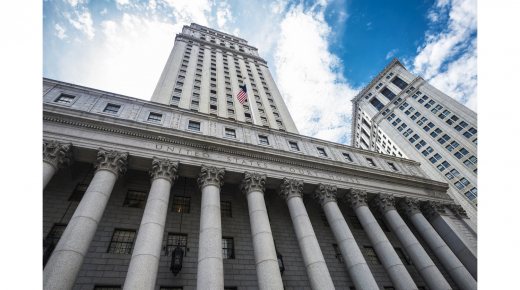
After years of litigation involving state, federal, Irish, and (to a lesser extent) Swiss law; transfers of numerous assets, including Ireland’s priciest-personal residence; a jury trial; and extensive post-trial briefing, the Second Circuit made short shrift of a former real estate mogul and his ex-wife’s appeal of a judgment rendered against them for fraudulent conveyances.
Once called the “Baron of Ballsbridge” for his development projects in Ballsbridge, Ireland, Sean Dunne’s real estate empire fell apart after the 2008 financial crisis. Unable to pay debts he personally secured, Dunne and an entity related to the Irish government, National Asset Loan Management, Ltd. (“NALM”), reached an agreement in which Dunne agreed to pay NALM about $235 million. U.S. litigation began in 2012, when NALM sued Dunne, his ex-wife (Gayle Killilea), and various corporate entities in Connecticut state court for fraudulent transfers of Dunne’s assets to Killilea and others. Coan v. Dunne, No. 21-2012, 2023 WL 7103275, at *1 (2d Cir. Oct. 27, 2023).
In 2013, Dunne filed for bankruptcy in the District of Connecticut. The bankruptcy trustee then intervened in the state-court action brought by NALM and removed it to the federal district court. The trustee also initiated adversary proceedings based on Dunne’s allegedly fraudulent transfers, and those proceedings were consolidated in the District of Connecticut with the action brought by NALM.
After years of litigating, the district court oversaw a jury trial in 2021 regarding the allegedly fraudulent transfers leading up to Dunne’s bankruptcy. Of particular note was a property known as “the Walford,” purchased by Dunne in 2005 for €58 million, making it Ireland’s most expensive house. Dunne argued that he did not own the Walford at the time of the allegedly fraudulent transfer, as he placed it into trust for Killilea in 2005. Dunne made similar arguments as to the propriety of various other challenged transfers, including that they were required by a 2005 post-nuptial agreement and a Swiss court’s order on the same.
The jury returned a split verdict but found against Dunne and Killilea on various transfers (including of the Walford) under U.S. and Irish law. Dunne and Killilea challenged the verdict on several grounds, including based on a decision entered by the Irish High Court shortly after the jury returned a verdict. In a dispute between Irish tax authorities and Yesreb Holding Limited (“Yesreb”), a Cypriot entity to which the Walford was transferred, the Irish court found that “Dunne ceased to have any interest in the Walford as of 9 October 2006” and instead had “entered into a contract . . . (purporting to be a trustee for Killilea) with Yesreb for the sale of Walford.” Id. at *2 (cleaned up).
Neither the Irish High Court’s decision nor Dunne and Killilea’s other arguments were enough for the district court to overturn the jury’s findings. Specifically as to the preclusive effect of the Irish court’s order, the district court agreed with the trustee’s argument that “the fact that the Irish High Court reached a [different] conclusion . . . , based on different evidence, involving different parties and concerning different legal issues does not evidence a conflict between Irish and U.S. law or implicate comity.” Coan v. Dunne, 3:15-cv-00050, 2021 WL 3012678, at *16 (D. Conn. July 15, 2021). The court continued that “the principles of comity do not require U.S. courts to negate their own findings or judgments simply because an unhappy litigant is able to secure a later conflicting finding or judgment from a tribunal somewhere else in the world.” Id.
Thus, despite the complex web of transactions, litigation, and entities spanning the globe, the district court found that the jury appropriately rendered a verdict in accordance with the law and the evidence before it. Thus, it ordered Killilea to pay the bankruptcy trustee €19,172,935.60 and $278,297.18. See id. at *35 (denying Dunne’s motion for post-verdict relief); Coan v. Dunne, 3:15-cv-00050 (JAM), 2022 WL 369012, at *7 (D. Conn. Feb. 8, 2022) (denying Killilea’s post-trial motion).
The Second Circuit had little difficulty affirming. After laying out the history of the case and its standard of review, the court’s analysis was simple: “After an independent review of the record and the applicable law, we affirm the judgment entered in the case for substantially the same reasons as those set forth by the district court in its thorough and exceptionally well-reasoned rulings on Dunne’s and Killilea’s post-trial motions.” Coan, 2023 WL 7103275, at *3 (2d Cir. Oct. 27, 2023).
* * *
An endnote for the architecturally or historically curious. Since litigation began, Yesreb sold the Walford property to Dermot Desmond (the billionaire owner of Celtic F.C.) for €14.25 million, a 75% discount from Dunne’s 2005 purchase. The century-old house was subsequently demolished and replaced with a 17,000 square foot mansion “similar to that of a Palladian villa.”
Federal law assigns to U.S. district courts original jurisdiction over all cases under Title 11 (the Bankruptcy Code) and all civil proceedings arising under Title 11 or arising in or relating to Title 11. See 28 U.S.C. § 1334(a), (b). Federal law permits each U.S. district court to refer such cases and civil proceedings to bankruptcy courts, and district courts generally do so. But bankruptcy courts, unlike district courts, are not courts under Article III of the Constitution, and are therefore constrained in what powers they may constitutionally exercise. For example, the Supreme Court has repeatedly restricted a bankruptcy court’s power to enter final judgment in state-law claims brought by debtors against other parties. Recently, the Fourth Circuit addressed a converse question: whether bankruptcy courts are bound by the limits on Article III courts, in particular the constitutional bar on hearing a case that has become moot. The Fourth Circuit held that they are not so barred. Kiviti v. Bhatt, No. 22-1216 (4th Cir. Sept. 14, 2023).
The Fourth Circuit’s ruling occurred as part of deciding on another procedural question: finality. Adiel and Roee Kiviti had a dispute with Naveen Bhatt about a renovation that the Kivitis had hired him to perform on their home. They brought an action against him in D.C. Superior Court seeking recovery of the $58,770 they had paid him. Bhatt then filed for bankruptcy. The Kivitis filed a proof of claim and also brought an adversary proceeding, seeking a declaration that they were owed the $58,770 (Count I) and that the debt was non-dischargeable (Count II). The bankruptcy court dismissed Count II, holding that the debt was dischargeable to the extent it existed, and allowed Count I to go to trial. Apparently concluding that there was little use in litigating Count I by itself given the presence of the proof of claim, the parties agreed to stipulate to the dismissal of Count I (without prejudice to renewing it if Count II was restored on remand) and appeal. Such dismissal was necessary because ordinarily only a final bankruptcy order is appealable: an order only partially resolving a case (such as by dismissing a particular count) is insufficient. The district court affirmed the bankruptcy court’s ruling on appeal, and that decision was then appealed to the Fourth Circuit.
The Fourth Circuit held that the district court had lacked jurisdiction over the appeal. The Fourth Circuit concluded that the bankruptcy order was not a final order, because it had not fully resolved the adversary proceeding. The Fourth Circuit emphasized that parties may not avoid Congress’s limitations on appellate review by manufacturing finality through the voluntary dismissal of claims. Next, however, the Fourth Circuit addressed an exception to this principle: when a court dismisses some claims in a manner that renders it impossible for the remaining claims to be successful, a voluntary dismissal of the remaining claims can make the dismissal a final order. The Kivitis argued that this principle was applicable here. Once the bankruptcy court concluded that the debt was dischargeable, they argued, the adversary proceeding was moot: because a dischargeable debt could only be collected through the bankruptcy’s proof-of-claims process, and they had already filed a proof of claim, the bankruptcy court could not give them any effective relief. Because mootness deprived the bankruptcy court of jurisdiction, the Kivitis argued, the bankruptcy court’s order dismissing the non-dischargeability count (and therefore rendering the remaining claim moot) amounted to a final order.
The Fourth Circuit rejected this argument. The Fourth Circuit did not contest that the adversary proceeding may have been moot, but rejected the premise that mootness is fatal to a bankruptcy court’s jurisdiction. The court noted that the mootness doctrine stems from Article III’s limitation of the judicial power to cases and controversies. As such, the court reasoned, mootness does not apply of its own force to bankruptcy courts, which are not Article III courts. The mootness constraint does apply to the district court’s referral of a case or proceeding to a bankruptcy court, and to a district court’s review of a bankruptcy court’s ruling, but does not apply to a bankruptcy court’s exercise of jurisdiction over a case or proceeding.
The Fourth Circuit further concluded that Congress had not imposed this constraint on bankruptcy courts by statute. The court pointed to Congress’s broad grant of jurisdiction to bankruptcy courts to “hear and determine all cases under title 11 and all core proceedings arising under title 11, or arising in a case under title 11, referred under subsection (a) of this section,” without any limitation to cases or proceedings that a district court could hear in its own right. See 28 U.S.C. § 157(b)(1). The Fourth Circuit stated that it would not impose limitations not imposed by the statutory text. The court also noted, but rejected, the reasoning of certain bankruptcy court decisions that Article III constrains bankruptcy court jurisdiction because district courts may withdraw referred cases or proceedings and because federal law refers to bankruptcy courts as “unit[s]” of a district court and to bankruptcy judges as “judicial officers” of the district court. See 28 U.S.C. § 151. Congress did not specify that bankruptcy courts lacked jurisdiction over cases or proceedings that district courts could not withdraw, and bankruptcy courts exercise power through their own grant of jurisdiction, not as mere adjuncts of district courts. Likewise, the Fourth Circuit declined to read the terms “cases” and “proceedings” in the statutory grant of jurisdiction to bankruptcy courts as incorporating Article III’s limitations.
Thus, the Fourth Circuit held, the bankruptcy court retained jurisdiction over the bankruptcy proceeding, and the bankruptcy court’s dismissal order was not a final order. The district court therefore lacked jurisdiction over the appeal and its order was vacated and remanded.
Mr. Lowenthal, Chair of the firm’s Business Reorganization and Creditors' Rights Practice, has earned recognition as a skilled advocate in the bankruptcy, creditors' rights, and corporate restructuring arena. He represents creditors' committees, trade creditors, indenture trustees, and bankruptcy trustees and examiners in domestic and international cases.
Mr. Lowenthal recently served as counsel to the court-appointed Examiner in the chapter 11 cases of FTX Trading Ltd. and its affiliates. In this position, he investigated issues critical to the FTX bankruptcy cases, including potential conflicts of interest and fraudulent transfers, that were summarized in two publicly filed reports.
Mr. Lowenthal also represents U.S. and non-U.S. business entities in a wide range of complex litigation issues, including creditors’ rights disputes, purchases of intellectual property assets, and distressed debt acquisitions and restructuring. He has achieved numerous favorable results for clients in trial and appellate courts as well as commercial arbitration. Recently, he successfully defended former executives of a failed European bank against allegations that they had defrauded investors.
A regular speaker on bankruptcy law topics, Mr. Lowenthal recently presented for the American Bankruptcy Institute, the Practising Law Institute, INSOL International, INSOL Europe, and the Association of Corporate Counsel. Most recently, Mr. Lowenthal was a member of INSOL Europe’s 2023 Amsterdam Congress Technical Committee. He has been recognized by JD Supra’s Readers’ Choice Awards as one of the top ten authors in the Bankruptcy category from 2023-2026. Mr. Lowenthal has received Martindale-Hubbell’s highest rating of "AV Preeminent" based on both peer and client reviews and has been named to The Best Lawyers in America in the area of Bankruptcy and Creditor Debtor Rights / Insolvency and Reorganization Law. He has also been named by Super Lawyers in the areas of bankruptcy: business and business litigation. Lastly, Mr. Lowenthal has been named to the 2022-2026 editions of the Lawdragon 500 Leading U.S. Bankruptcy & Restructuring Lawyers guide.
Representative Matters
Represented court-appointed Examiner in chapter 11 cases of FTX Trading Ltd., including assisting him with various investigations summarized in two publicly filed reports.
Represented foreign administrators of a global alternative energy company in its chapter 15 cross-border bankruptcy case, successfully petitioning the court for the return of over $28 million held in a U.S. bank account.
Representing noteholders of a Brazilian company in a lawsuit arising from a debt default.
Representing the Oversight Committee for a post-confirmation liquidating trust in the Southern District of Texas.
Representing the Indenture Trustee for a series of unsecured notes in connection with an Italian insolvency proceeding and a related chapter 15 case.
Represented a bidder in a competitive auction to acquire the assets of a chapter 11 debtor.
Lead counsel to the Official Committee of Unsecured Creditors of multi-state real estate developer with liabilities in excess of a billion dollars. The Bankruptcy Court praised the “remarkable results” achieved through the “extraordinary efforts” of Patterson Belknap attorneys in this case.
Representing an international financial institution as Indenture Trustee in cross-border insolvency cases pending in Grand Cayman and Hong Kong.
Represented an Indenture Trustee and Co-Chair of the Official Committee of Unsecured Creditors on over $5 billion of unsecured debt in one of the largest, most complex cases ever filed in Delaware, the Energy Future Holdings Corp. cases.
Represented an Indenture Trustee in the Nortel Networks Inc. cross-border cases, a set of insolvency cases filed in the U.S., the U.K., and Canada.
Represented an Indenture Trustee on bonds governed by New York law in an insolvency case in London.
Represented an Indenture Trustee on $1.7 billion of unsecured debt in the Washington Mutual, Inc. case.
Representing a former member of the Board of Directors in The Weinstein Company Holdings bankruptcy case.
Represented an international law firm in a proceeding before the U.S. Bankruptcy Court relating to conflicts of interest in a Chapter 11 representation.
Represented the winning bidder in an auction to acquire the assets and intellectual property from a Chapter 7 debtor over the objection and competing bid of the debtor’s secured lender.
Special litigation counsel to an Official Committee of Unsecured Creditors to investigate fraudulent conveyance claims.
Conducted an internal investigation of a multi-national law firm following its role in a large Chapter 11 bankruptcy case.
Representing the Post-Confirmation Trustee in the Tarragon Corporation case.
Special litigation counsel to a Chapter 7 trustee in the bankruptcy of an employee leasing company.
Represented an Indenture Trustee in the Nortel Networks Inc. cross-border cases, a set of insolvency cases filed in the U.S., the U.K., and Canada.
Represented the Liquidating Trust Board in the TerreStar Networks Inc. case.
Represented the Trust Oversight Committee in the Disney retail store chain case.
Represented Harrison J. Goldin, an Examiner in the Enron Corp. case, in an investigation of many of Enron's special-purpose-entity transactions.
Representing international creditors, including entities in the U.K., the Netherlands, and Germany, in the Lehman Brothers Holdings Inc. case.
Represented a Scottish aviation company in the Hawker Beechraft Corporation case.
Defending a reinsurance company in a fraudulent conveyance lawsuit brought by creditors of Tribune Company in U.S. Federal Court.
Representing a Mexican creditor in the Stanford International Bank Ltd. case.
Obtained a favorable result on behalf of the largest private bank in Brazil in connection with the Chapter 15 case of a Brazilian company.
Represented the Retiree Committee in the U.S. Airways, Inc. case, including serving as trial counsel on the debtor’s motion to eliminate retiree benefits.
Won a crucial decision of first impression for financial institutions whose security interests were challenged by the bankruptcy trustee in The Bennett Funding Group, Inc. case, a case that stemmed from an alleged $1 billion Ponzi scheme.
Represented the Official Committee of Unsecured Creditors in the STAR Telecommunications, Inc. case.
MEMBERSHIPS: American Bar Association; Bankruptcy and Corporate Reorganization Committee of the New York City Bar Association; American Bankruptcy Institute; Board of Editors, The Bankruptcy Strategist; INSOL International; INSOL Europe (2023 Amsterdam Congress Technical Committee); Turnaround Management Association and the New York Institute of Credit.
Virginia Business, "Speyside Bourbon Cooperage to lay off 52 in Atkins," (March 4, 2026)
Law360, "PrimaLend to Seek OK for Ch. 11 Bidding in Market Test," (January 6, 2026)
Bloomberg Law, "Bankruptcy in 2026 to Be Guided by Policy Change, Fraud Scrutiny," (January 2, 2026)
Law360, "4 Shocking Moments in Bankruptcy History," (April 17, 2024)
Law360, "Bankruptcy Issues To Watch In 2024" (January 1, 2024)
Law360, "Purdue's High Court Case Puts Bankruptcy Pragmatism On Trial" (December 1, 2023)
Turnarounds & Workouts, "Key Issues in WeWork" (November 2023)
Forbes, "FTX Examiner Compromise Would Bring Investigation With Limited Scope" (February 7, 2023)
Forbes, "FTX’s Ray, Battling To Avoid Outside Probe, Faces Court Bout With Trustee" (February 4, 2023)
Barron's, "FTX U.S. Customers’ Funds Might Take Years to Recover: Experts" (December 2, 2022)
Bloomberg Law, "Bankruptcy Lawyers Gird for Onslaught of Battered Companies" (March 23, 2020)
Oil Express, "Despite Court Ruling, Possible Sale of CITGO Likely a Long Way Off" (August 1, 2019)
Westlaw Journal, "Attorneys weigh impact of high court’s bankruptcy contract rejection ruling" (June 20, 2019)
Bloomberg Law, "Cloud Peak Shareholders Want Say in Bankruptcy Reorganization" (May 22, 2019)
Law360, "Justices Save TM Licensees From Contract Conundrum" (May 21, 2019)
World Intellectual Property Review, "SCOTUS Examines TM Licensing Post-Bankruptcy" (February 21, 2019)
Reuters, "Gymboree Files for Chapter 11 as More Retailers Restructure Debt" (January 18, 2019)
The New York Times, "PG&E Bankruptcy Could Deal Blow to Its Solar-Power Suppliers’ Finances" (January 17, 2019)
Los Angeles Times, "PG&E to file for bankruptcy as wildfire costs hit $30 billion. Its stock plunges 52%" (January 14, 2019)
Bloomberg Law, "2019 Outlook: Plenty of Restructuring Work Ahead" (December 31, 2018)
Oil Price Information Service,"Deal Keeps Venezuela in Control of CITGO" (November 26, 2018)
Chicago Tribune, "Whirlpool to Sears: We want our appliances back" (October 29, 2018)
Private Debt Investor, "Sears files for bankruptcy, TSLX a creditor in the case" (October 16, 2018)
Los Angeles Times, "Bankruptcy gives Sears the opportunity to stay alive, its chairman says" (October 15, 2018)
Chain Store Age, "Sears’ Bankruptcy: Experts weigh in" (October 15, 2018)
Associated Press, “Nation’s largest mattress retailer files for bankruptcy” (October 5, 2018)
Daily Mail, “Mattress Firm files for bankruptcy and plans to close up to 700 stores amid exploding competition from online retailers like Amazon and Casper” (October 5, 2018)
Chain Store Age, “Mattress Firm files for Chapter 11, closing up to 700 stores” (October 5, 2018)
Financial Times, “Sears’ survival hangs in balance as investors weigh rescue plan” (September 26, 2018)
Legal Newsline, "Federal judge joins others, says bankruptcy court not allowed to impose punitive sanctions" (January, 2018)