

Patterson Belknap
Microsoft has discontinued support for Internet Explorer. To access the Patterson Belknap website, please install a modern browser like Microsoft Edge or Google Chrome.
We use cookies to enhance your experience of our website and provide us with information on how you use our website. For more information about the way our site uses cookies, please read our Privacy Policy. Click "Accept Cookies" to enable cookies and third-party content or “Decline” to decline the use of cookies.
Accept CookiesDecline
mobile logo
High Contrast Mode
  • Search
  • People
  • Practices
  • Values
    Inclusion and Engagement
    Pro Bono
    Core Values
  • Firm
    About Our Firm
    Careers : Attorneys
    Careers: Business Services
    Contact Us
    Blogs & Podcasts
    Firm News
    Publications
    Events
Skip Nav
Patterson Belknap Logo
Inclusion and Engagement
Pro Bono
Core Values
About Our Firm
Careers
AttorneysBusiness Services
Contact Us
News & Resources
Blogs & PodcastsFirm NewsPublicationsEvents

Find a Person


Search
  • A
    B
    C
    D
    E
    F
    G
    H
    I
    J
    K
    L
    M
  • N
    O
    P
    Q
    R
    S
    T
    U
    V
    W
    X
    Y
    Z
  • View All
  • A
    B
    C
    D
    E
    F
    G
    H
    I
    J
    K
    L
    M
    N
    O
    P
    Q
    R
    S
    T
    U
    V
    W
    X
    Y
    Z
    View All

Find a Practice

Search
  • Corporate & Transactions
  • Exempt Organizations & Private Clients
  • Litigation, Disputes & Investigations
  • All Practices
printable-logo
Top Section Service Marquee Img

How to Build a Nation in 15 Weeks

Categories / Search
Categories / Search

Search Blog

Search
Posts
Bibliography - Seasons 1 & 2
Bibliography - Season 3

Series Conclusion

After four seasons, more than 70 hours, and 75 episodes, Harry and Jon share some parting thoughts on the Constitution, the problems and struggles of interpretation, the role of politics and compromise, and some constitutional near misses. Rejecting the idea...
August 30, 2022

The Presidency: the 22nd and 25th Amendments

Despite the constitutional convention’s tentative rejection of term limits, early presidents establish a custom of two terms (each for their own reasons). After a few presidents flirt with a third (nonconsecutive) term, FDR goes for four, leading Congress to make...
August 23, 2022

Elections: the 20th Amendment

Poor initial planning leaves Congressional terms and Congressional sessions badly out of sync, and 130 years’ worth of long and short sessions. A dispute over shipping subsidies rebalances the sessions, but leaves a short lame duck period. Tweaks to the...
August 16, 2022

Democracy, Part 2: the 24th and 26th Amendments

The 24th Amendment goes halfway toward removing poll taxes—one of the many historical practices used to suppress voting on the basis of race and class—before the Supreme Court expands the scope of the 14th Amendment to go all the way....
August 9, 2022

Democracy, Part 1: the 17th, 23rd, and DC Voting Rights Amendments

120 years of corruption and deadlocks finally allow reformers to achieve direct election of Senators, with the hope of a more responsive and functional Senate. (Points for trying, we suppose.) An absent-minded decision by the Federalists strips DC residents of...
August 2, 2022

The Child Labor Amendment

Popular opinion rises against child labor, and the Supreme Court shrugs. Congress tries again, but the Court is unmoved. Congress passes an amendment, ratification stalls, we take a detour through Kansas, and questions about the ratification process are raised but...
July 26, 2022

Prohibition: the 18th & 21st Amendments

A multi-decade organizing project by the WCTU and ASL and the malapportionment of state legislatures leads to the passage of the 18th Amendment, with support from various factions. Alcohol use goes down, then doesn’t. Congress goes overboard in using criminal...
July 19, 2022

Taxation: the 16th Amendment

The delegates to the Constitutional Convention create distinctions without comprehensible differences. The advocates of broad taxation join the adversaries to luxuries to tax the carriage-riding classes. Justice Paterson begins a proud tradition of opinions on taxation that are long on...
July 12, 2022

Announcing Season 4: Remodeling

We’re back for the final season of How to Build a Nation in 15 Weeks. Join us as we discuss events and amendments from the past 100 years that remodeled the written Constitution into what it is today, including income...
July 5, 2022

Reconstruction: Conclusion

We discuss the decisions and events leading to the end of formal Reconstruction, culminating with the corrupt bargain ending the election of 1876 and the continuing attacks on multiracial democracy in America. We conclude by reflecting on the legacy of...
March 23, 2021

Bonus Episode: Impeachment Redux

In the wake of the second Trump impeachment, we review the Johnson, Clinton, and (first) Trump impeachments (and Nixon’s resignation), and conclude that not much is new under the sun. We also reflect on the inherently political nature of the...
March 16, 2021

Reconstruction: 19th Amendment, Part 2

During World War I, suffragists pursue both national and state-by-state strategies. The National Women’s Party takes a more radical approach with protests and hunger strikes, and is met with violence. The Wilson administration and Congress yield after continued organizing, and...
March 11, 2021

Reconstruction: 19th Amendment, Part 1

We begin our discussion of the struggle for women’s political rights in the United States with the Revolution, with a focus on the fight against coverture and slavery, and the particular challenges for Black women. The abolitionist, labor, and temperance...
March 9, 2021

Reconstruction: 15th Amendment

We discuss how organizing among African-Americans, continuing violence in the former Confederacy, and a union of principle and politics in the North lead Congress to move toward universal male suffrage, two years after rejecting it. Proponents of a guaranteed right...
March 4, 2021

Bonus Episode: Historical Parallels

The team convenes again to further discuss the January 6, 2021 insurrection and its echoes of the end of Reconstruction, as well as thoughts about the way forward. Participants: Kevin Opoku-Gyamfi, Harry Sandick, Jon Hatch
February 25, 2021

Reconstruction: 14th Amendment – Equal Protection Clause

Ongoing mob violence spurs Congress to try to help Black Americans achieve meaningful equality. But in the 1870s, the Supreme Court limits the clause to cover only state action, despite Congress’s intentions. In the 1890s, it allows segregation by state...
February 23, 2021

Reconstruction: 14th Amendment – Privileges & Immunities and Due Process Clauses

Congress draws on Article IV and the Corfield opinion to craft a new privileges and immunities clause, but the Supreme Court quickly narrows its scope to near-invisibility. Lochner era courts use the due process clause to promote economic rights but...
February 16, 2021

Reconstruction: 14th Amendment – Birthright Citizenship Clause

We discuss ancient and early modern doctrines regarding the inheritance of citizenship, state and federal citizenship in the early republic, and early arguments for racial equality among citizens. We return to Dred Scott’s creation of a racial exclusion to citizenship,...
February 9, 2021

Bonus Episode: 14th Amendment, Section 3 and Impeachment Revisited

In light of the January 6, 2021 insurrection at the Capitol and the second impeachment of Donald Trump, the team has reconvened to further discuss the history and mechanics of Section 3 and the use of impeachment against former government...
February 4, 2021

Reconstruction: 14th Amendment – Overview & Sections 2–4

We begin our review of the 14th Amendment with the lesser-known middle clauses. Northern demographics, racism, and sexism block universal voting rights, leading to indirect support of male suffrage that is too complicated to work. Section 3 precludes officeholding by...
February 2, 2021

Reconstruction: 13th Amendment

We review the history of resistance by enslaved people in the United States, and how the Civil War changed things, leading to widespread self-emancipation. We then talk about the intended scope of the amendment, its passage through moral arguments, solidarity,...
January 26, 2021

Prelude to Reconstruction: Harper’s Ferry through the Corwin Amendment

John Brown leads a raid on Harper’s Ferry and becomes a martyr. The Republicans prepare for their first real shot at the presidency. The Democratic convention disintegrates, the Northern and Southern wings propose competing candidates, and the Deep South prepares...
January 21, 2021

Prelude to Reconstruction: Fugitive Slave Act of 1850 through Dred Scott

In the wake of Prigg, Congress passes its worst law. Abolitionists debate whether the Constitution is pro-slavery, anti-slavery, or neutral. For love of a railroad, Stephen Douglas blows up the Missouri Compromise, and a preview of the Civil War breaks...
January 19, 2021

Prelude to Reconstruction: Constitutional Convention through Prigg

For hundreds of years, enslaved people resist and escape. The delegates’ initial compromises in 1787 give disproportionate influence to slaveholders. Additional compromises, including the Fugitive Slave Act of 1793 and Missouri Compromise, both recognize and limit slavery. (Some) Northerners become...
January 12, 2021

Announcing Season 3: Reconstruction

We’re back, with a new season about the next era of constitutional development: Reconstruction. Join us as we discuss the 13th, 14th, 15th, and 19th Amendments and surrounding events, America’s subsequent retreat from the promises of Reconstruction, and the continuing...
January 5, 2021

Bonus Episode: The Militia and Naval Acts

We return with a “lost” episode about how early Congresses filled in details that the Constitution left open. The Militia Acts strike a delicate balance between the state and federal governments and fail utterly to create a trained militia, so...
November 24, 2020

Unadopted Amendments of the 1810s: Titles of Nobility and Ill-Timed Reversals

Jerry Bonaparte gets married. Congress decides it really hates titles. The Titles of Nobility Amendment is almost ratified, but falls two states short, leading to a few conspiracy theories. (Lawyers are still US citizens, we promise.) Tensions with England and...
August 20, 2019

Early Constitutional Law Decisions: Arguments, Assets, Banks, Boats, Charters, Crimes, Debts, and Dams

A debt is paid, but not to the debtor. A will is probated, but not for the heirs. An argument is skipped, despite prior arrangements. A bank is taxed, without being named. A lottery is launched, but tickets are forbidden....
August 13, 2019

Twelfth Amendment: Gaming the System

Article II, Section 1 is founded on accident, immediately shows signs of trouble, and implodes within 12 years. Hamilton schemes, and others counterscheme. The Federalists swap Pinckneys. The Democratic-Republicans fail to coordinate and Jefferson and Burr end up tied. Jefferson...
August 6, 2019

Eleventh Amendment: Speculators and Self-Interest

The Convention commits a basic drafting error (probably). Georgia fails to pay some debts, Virginia claims some land, and Massachusetts grabs some property. The Committee of Detail drafts Article III. Randolph seizes an opportunity for an old client (and some...
July 30, 2019

Bill of Rights, Part 7: Unknown Rights and Limited Powers

The Tenth Amendment places (arguably) redundant restrictions on federal powers. The Patterson team discusses the ineffable nature of the Ninth Amendment, whether as a double redundancy, a murky wellspring of unknown rights, or an acknowledgment of the incompleteness of constitutionalism.
July 23, 2019

Bill of Rights, Part 6: Civil Juries

The Normans bring the original form of the jury to England in 1066 (or did they?) The colonists make jury rights central to the revolution, but the delegates don’t make the effort to add them to the Constitution. The Seventh...
July 16, 2019

Bill of Rights, Part 5: Criminal Procedure

The Patterson team discusses some of the Stuart abuses that shaped what rights ended up in the Fifth, Sixth, and Eighth Amendments. Freedborn John refuses the oath ex officio. Sir Walter Raleigh is denied the right to confront Cobham. Judge...
July 10, 2019

Bill of Rights, Part 4: Searches and Seizures

Writs of assistance come to the colonies, James Otis sets himself aflame with oratory, and John Adams takes notes. Massachusetts leads the way in restricting warrants. Dollree Mapp protects some salacious activities and writes herself into history. Georgia rejects the...
July 2, 2019

Bill of Rights, Part 3: Military Amendments

The Patterson team discusses the English and colonial antecedents of the Second Amendment, the fear of standing armies motivating its proposal, and the Congressional modifications before ratification. We then examine every federal appellate case interpreting the Third Amendment. (It doesn’t...
June 25, 2019

Bill of Rights, Part 2: Religion and Expression

Early colonists try to balance religious liberty with established state churches. John Peter Zenger goes to trial and suffers a pyrrhic loss. The murky origins of the free speech clause. James Madison slyly tweaks proposals from the state ratifying conventions....
June 18, 2019

Bill of Rights, Part 1: Drafting and Ratification

Federalists and Anti-Federalists debate the necessity, danger, and efficacy of amendments. Madison takes charge and persuades Congress to go along, eventually. The Senate ditches state restrictions and a strict separation of powers. Congress sends 12 amendments to the States. 10...
June 11, 2019

Mini-episode: 19th Century Constitutionalism and the Republic of Indian Stream

A riverine ambiguity leads the locals to return to first principles, and draft a constitution. The citizens borrow some rights, expand some others, delve into equal protection and equal obligation, reject separation of powers, and graft an executive, legislative, and...
June 4, 2019

Judiciary Acts, Part 2: Midnight Judges and Missing Commissions

The Patterson team debates whether the 1789 Act is pro-debtor or creditor. The Federalists giveth to the Midnight Judges, and the Democratic-Republicans taketh away. Marshall and Chase contemplate a strike. Marbury v. Madison establishes judicial review—or does it? The justices...
May 28, 2019

Judiciary Acts, Part 1: Hang Like a Bat to Every Particle

The First Congress picks up where Article III left off. Oliver Ellsworth gets possessive. The justices are told to make like post-boys and get on their horses. Congress tries to avoid amendments, and omits federal question jurisdiction and appeals from...
May 21, 2019

Bonus Episode: Professor Michael Klarman (Rebroadcast)

On this bonus episode, we spoke with Professor Michael Klarman, author of the excellent book the Framer’s Coup: The Making of the United States Constitution, about how the Framers designed the Constitution to be less democratic than the existing state...
May 14, 2019

Ratification, Part 4: The Anti-Federalists’ Last Stand

The Federalists face a 46–19 disadvantage in New York and adopt a strategy of delay. The Anti-Federalists don’t sweat New Hampshire, but word of Virginia’s ratification sways their resolve. Melancton Smith is persuaded by argument. The namesake of Great Jones...
May 7, 2019

Ratification, Part 3: The Anti-Federalists Strike Back

New Hampshire makes nine. The Anti-Federalists belatedly get their act together and put up a fight. Patrick Henry blusters and bullies his way through the Virginia convention. George Mason and Edmund Randolph each offer up their limbs. John Marshall makes...
April 30, 2019

Ratification, Part 2: Eight is Almost Enough

Delaware quickly ratifies, and Pennsylvania Federalists convene, imprison a few delegates, and force a quick ratification. New Jersey, Georgia, and Connecticut quickly ratify to grab equal Senate representation. The Massachusetts Federalists show flexibility and deploy a few rumors, John Hancock...
April 23, 2019

Ratification, Part 1: Monarchy Men, Military Men, Aristocrats, and Drones

The Patterson team explores the differences between Federalists and the Federalist Party, and fail to come up with an alternative name for the anti-Federalists, The Constitution goes public. The Federalists press their urban advantages, and their advantages in the press....
April 16, 2019

Season 2: Renovations

We’re back! The Constitution has been drafted—but how did it overcome anti-Federalist opposition to get ratified? And how did the omissions and mistakes in the original draft get fixed (or not)? Join the Patterson team for a new season of...
April 9, 2019

Bonus Episode: Interview with Professor Michael Klarman

On this bonus episode, we spoke with Professor Michael Klarman, author of the excellent book the Framer’s Coup: The Making of the United States Constitution, about how the Framers designed the Constitution to be less democratic than the existing state...
October 24, 2018

Conclusion: “A republic, if you can keep it.”

The end of an 18-week journey. Thanks to our colleagues, our producers, and the Firm. Reflections on the Convention, including the question of authorship, the past and current quality of political dialogue, the guiding design (or lack thereof) of the...
September 25, 2018

Page 1 of 2

About This Podcast

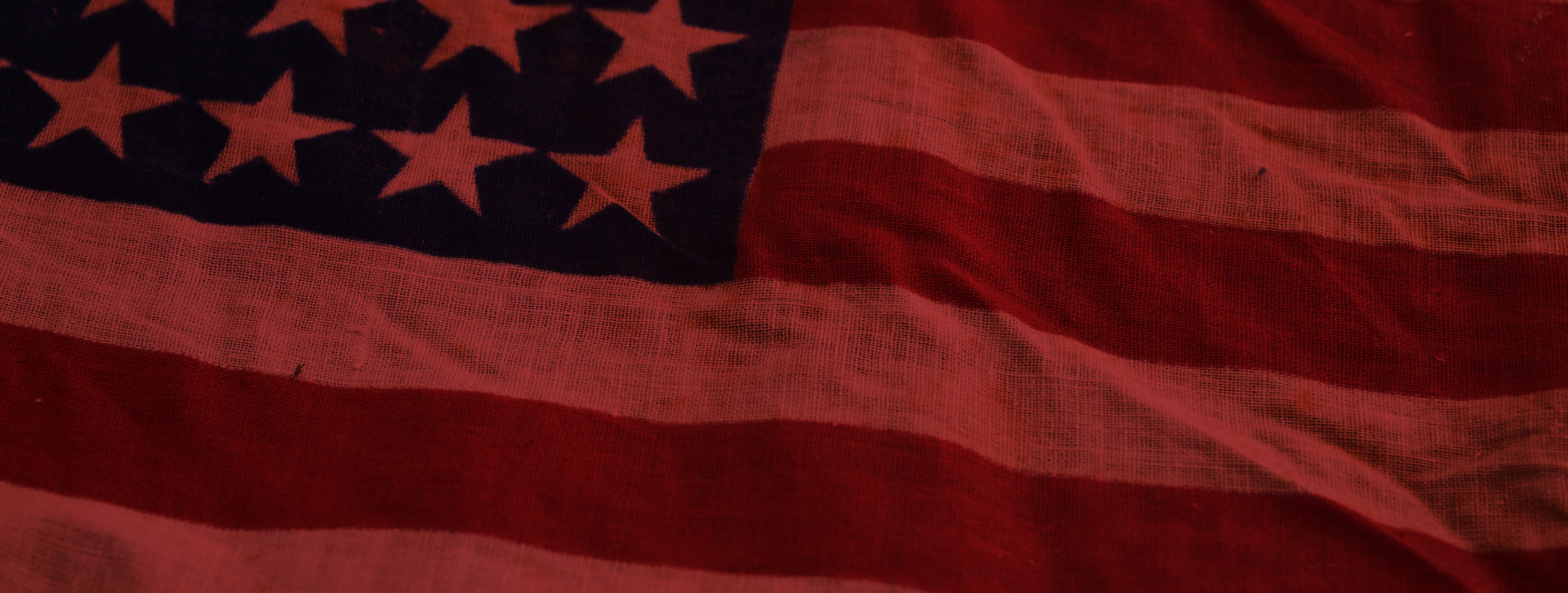
Building a nation in 15 weeks may sound like a daunting summer project, but that’s just what happened at the Constitutional Convention in the summer of 1787. The first season of our podcast revisits the hottest topics from that convention, week by week, and tracks their current place in our legal and political landscape. In our second season, that same analysis is brought to the history of the Constitution in the early republic era in the first few decades of our country’s history, from ratification to the Bill of Rights to the early amendments. Our third season moves forward to cover the Reconstruction era, including the 13th, 14th, and 15th amendments, and the 19th amendment, ratified in 1920. Building on our study of history and our experience as attorneys, we ask questions that tie the past to the present: Does today’s Supreme Court think about separation of powers in the same way that the Committee of Detail did? How did the Constitution overcome anti-Federalist opposition to get ratified? What was the intended scope of the 14th Amendment? These are some of the questions that our co-hosts, former Assistant U.S. Attorney and frequent legal commentator Harry Sandick and commercial litigator and history enthusiast Jon Hatch will examine in a roundtable format, along with their colleagues at Patterson Belknap.

Podcast Contributors

  • Contact Harry Sandick.

    Harry Sandick

    212.336.2723

    Email

  • Contact Andrew I.  Haddad.

    Andrew I. Haddad

    212.336.2331

    Email

  • Contact Joshua Kipnees.

    Joshua Kipnees

    212.336.2838

    Email

  • Contact Tara J. Norris.

    Tara J. Norris

    212.336.2847

    Email

  • Contact Julie A. Simeone.

    Julie A. Simeone

    212.336.2086

    Email

Posts
Bibliography - Seasons 1 & 2
Bibliography - Season 3

Firm Highlights

Blog Post
SEC Enforcement Results for FY 2025: “Unique Period of Transition”
The Securities and Exchange Commission issued a press release on April 7, 2026, announcing the agency’s enforcement results for transitional period under the new presidential administration.[1] Describing FY 2025 as “a unique period of transition,” the statement pointed to a pulse of enforcement actions initiated between October and December 2024 [2] under outgoing SEC Chair Gary Gensler, critiquing the activity as “unprecedented rush” and the focus as an “aggressive pursuit of novel legal theories.”[3]. Current SEC Chair Paul S. Atkins described the shift as having “redirected resources toward the types of misconduct that inflict the greatest harm—particularly fraud, market manipulation, and abuses of trust.”[4] During FY 2025, the SEC brought 303 standalone enforcement actions, a combination of civil suits and administrative procedures that...
Event
Stephanie Glaser to Speak at American Conference Institute's 6th Annual Summit for Women Leaders in IP Law
On Wednesday, June 3, Counsel Stephanie Bunting Glaser will speak on a program at the American Conference Institute's 6th Annual Summit for Women Leaders in IP Law titled "Copyrights in Synthetic Media: Protecting Creativity in the AI Era." Ms. Glaser will join Emily Lanza (Senior Counsel, U.S. Copyright Office, Office of Policy & International Affairs) to explore new challenges created by artificial intelligence in copyright law and offer strategies for safeguarding creative assets. To learn more, please click here.
Blog Post
It’s All Relative: Judge Komitee Holds That an Infringing Sale Can Take Place at Multiple Times Both Before and After a Patent Issues
Judge Eric Komitee recently denied a motion to dismiss patent infringement claims accusing flood prevention products sold pursuant to a contract that was entered into before the patent issued but delivered and installed after issuance.   In 2013, plaintiff FloodBreak, LLC filed its patent application for a device that prevents flooding in subway systems. In 2016, while that application was pending, defendants T. Moriarty & Son, Inc. and James P. Moriarty, Jr. (collectively, “TMS”) contracted with the Metropolitan Transportation Authority (“MTA”) to supply flood-mitigation devices for the New York City subway. After the patent issued in 2017, FloodBreak sued TMS’s supplier and obtained a stipulated judgment that its devices infringe. FloodBreak then filed suit against TMS alleging infringement by TMS’s offer...
Publication
New Executive Order Regarding IRA Enhancements
Introduction On April 30, 2026, President Trump signed an Executive Order (the “Order”) designed to expand access to retirement savings for the tens of millions of American workers who currently lack employer-sponsored retirement plans, including many small-business employees, part-time workers, independent contractors, and self-employed individuals facing barriers to saving for retirement. The Order is designed to complement the Federal Saver's Match enacted under the SECURE 2.0 Act, which provides eligible workers with a federal matching contribution of up to $1,000 for retirement savings, and to promote high-quality, low-cost individual retirement account (“IRA”) access. Key Provisions and Implications The Order directs the Secretary of the Treasury (the “Secretary”) to establish, by January 1, 2027, an informational website (TrumpIRA.gov) that will serve as a...
Firm News
Firm Obtains Dismissal of False Claims Act Suit on Behalf of McGraw Hill
On May 15, 2026, Patterson Belknap successfully secured the dismissal of a False Claims Act lawsuit brought by the Florida Attorney General's Office (the "Florida AG Office") against the firm’s client, education solutions provider McGraw Hill, LLC ("McGraw Hill"), in Florida's Second Judicial Circuit Court. The lawsuit was brought in August 2025 following an investigation and subpoena process in which the Florida AG's Office alleged that McGraw Hill violated Florida’s “most favored nation” pricing statute. The Court ruled that Florida’s most favored nation statute did not regulate the sale of materials within Florida, requiring dismissal of the entirety of the Florida AG Office’s complaint with prejudice. The case was brought by the State of Florida against McGraw Hill and Savvas, another provider...
Firm News
Firm Achieves Significant Lanham Act Win for Johnson & Johnson
On April 17, 2026, Patterson Belknap secured a significant victory for our clients, Johnson & Johnson and Janssen Biotech, Inc. (“J&J”), when the U.S. District Court for the Southern District of New York denied a preliminary injunction in a Lanham Act suit filed by Bayer HealthCare LLC (“Bayer”).   The dispute concerned a retrospective scientific study sponsored by J&J that compared the real-world efficacy of both companies’ prostate cancer medications, concluding that J&J’s ERLEADA was associated with a reduction in overall risk of death approximately 50% greater than Bayer’s NUBEQA. Bayer alleged that the study was methodologically flawed, and that J&J’s publication of the study results therefore constituted “false advertising.” The statements at issue included a presentation given by the study authors at a medical...
Publication
Employment Law Compliance for Start-Ups
Before you press "go" to launch your next business idea, as a founder and entrepreneur of a start-up company you should address an important (if uninspiring) step: employment law compliance. Complacency now can turn into an expensive distraction later, with the potential to create surprise liabilities and maybe even scuttle future deals. This alert flags core employment law issues every start-up should tackle now so they don't snowball later. Onboarding Compliance Checklist Before work can begin, employers must check an ever-growing number of compliance boxes: Register to Do Business: Register your company in each state where you have employees (e.g., the local departments of tax, labor, state, etc.). Workers' Compensation and Unemployment Insurance: Obtain both in each state where you have employees. New Hire Reporting:...
Blog Post
Bankruptcy Court Denies Motions to Convert Case and to Appoint an Examiner
A bankruptcy judge has ruled that a debtor can satisfy the Bankruptcy Code’s rehabilitation standard by selling its assets as a going concern and thereby avoid conversion from chapter 11 to chapter 7. In the same decision, the court denied a motion seeking the appointment of what the movants called an “examiner with expanded powers.” In re Deqser, LLC, Case No. 25-10687, 2026 Bankr. LEXIS 1004 (Bankr. D. Del. Apr. 22, 2026). The debtors operated a laundry business that serviced hotels located in New York City. The business suffered a downturn following an electrical fire at its facility as well as problems with its software. The debtors filed chapter 11 in early 2025. During their case, the debtors lost about $200,000 a...
Publication
Insider Trading Safeguards Can Mitigate Sports Betting Risk
From sports betting to prediction markets, the phenomenon some call "the casino-ification of America" has captured the American zeitgeist. Sports betting in particular has become ubiquitous since the U.S. Supreme Court's 2018 decision in Murphy v. NCAA, which opened the door for states to legalize sports gambling. Fans can now regularly bet on games and player performances directly from their smartphones. And, as several recent criminal indictments have alleged, some bettors are capitalizing on their access to inside information to obtain an unfair advantage on their wagers. This article will discuss how, because sports-related inside information continues to become more valuable, organizations including professional sports leagues, governing bodies, college athletic conferences, athletic departments and teams are playing an increasingly prominent role in...
Event
Firm Partners to Speak at American Conference Institute's 2026 Biosimilars & Innovator Biologics Conference
On Tuesday, June 2 and Wednesday, June 3, 2026, Partners Jay Cho and Aron Fischer will speak at the American Conference Institute's 2026 Biosimilars & Innovator Biologics Conference, the premier forum for biosimilars strategy, innovation, and litigation trends. On June 2 at 12:00pm, Mr. Cho will speak on a panel titled "The Evolving Parameters of the Safe Harbor Defense to Patent Infringement: Excluded Activities and the 'Reasonably Related' Standard." He will join Eric W. Dittmann (Partner, Paul Hastings), James T. Evans, Ph.D. (Senior Director, Assistant General Counsel, Global IP Litigation, Regeneron Pharmaceuticals, Inc.), and Henry Gu (SVP, Head of Intellectual Property, Zentalis Pharmaceuticals) for a discussion on critical elements of the Safe Harbor defense and recent case law. On June 3 at 2:00pm, Mr....
Blog Post
SEC Enforcement Results for FY 2025: “Unique Period of Transition”
The Securities and Exchange Commission issued a press release on April 7, 2026, announcing the agency’s enforcement results for transitional period under the new presidential administration.[1] Describing FY 2025 as “a unique period of transition,” the statement pointed to a pulse of enforcement actions initiated between October and December 2024 [2] under outgoing SEC Chair Gary Gensler, critiquing the activity as “unprecedented rush” and the focus as an “aggressive pursuit of novel legal theories.”[3]. Current SEC Chair Paul S. Atkins described the shift as having “redirected resources toward the types of misconduct that inflict the greatest harm—particularly fraud, market manipulation, and abuses of trust.”[4] During FY 2025, the SEC brought 303 standalone enforcement actions, a combination of civil suits and administrative procedures that...
Event
Stephanie Glaser to Speak at American Conference Institute's 6th Annual Summit for Women Leaders in IP Law
On Wednesday, June 3, Counsel Stephanie Bunting Glaser will speak on a program at the American Conference Institute's 6th Annual Summit for Women Leaders in IP Law titled "Copyrights in Synthetic Media: Protecting Creativity in the AI Era." Ms. Glaser will join Emily Lanza (Senior Counsel, U.S. Copyright Office, Office of Policy & International Affairs) to explore new challenges created by artificial intelligence in copyright law and offer strategies for safeguarding creative assets. To learn more, please click here.
Blog Post
It’s All Relative: Judge Komitee Holds That an Infringing Sale Can Take Place at Multiple Times Both Before and After a Patent Issues
Judge Eric Komitee recently denied a motion to dismiss patent infringement claims accusing flood prevention products sold pursuant to a contract that was entered into before the patent issued but delivered and installed after issuance.   In 2013, plaintiff FloodBreak, LLC filed its patent application for a device that prevents flooding in subway systems. In 2016, while that application was pending, defendants T. Moriarty & Son, Inc. and James P. Moriarty, Jr. (collectively, “TMS”) contracted with the Metropolitan Transportation Authority (“MTA”) to supply flood-mitigation devices for the New York City subway. After the patent issued in 2017, FloodBreak sued TMS’s supplier and obtained a stipulated judgment that its devices infringe. FloodBreak then filed suit against TMS alleging infringement by TMS’s offer...
Publication
New Executive Order Regarding IRA Enhancements
Introduction On April 30, 2026, President Trump signed an Executive Order (the “Order”) designed to expand access to retirement savings for the tens of millions of American workers who currently lack employer-sponsored retirement plans, including many small-business employees, part-time workers, independent contractors, and self-employed individuals facing barriers to saving for retirement. The Order is designed to complement the Federal Saver's Match enacted under the SECURE 2.0 Act, which provides eligible workers with a federal matching contribution of up to $1,000 for retirement savings, and to promote high-quality, low-cost individual retirement account (“IRA”) access. Key Provisions and Implications The Order directs the Secretary of the Treasury (the “Secretary”) to establish, by January 1, 2027, an informational website (TrumpIRA.gov) that will serve as a...
Firm News
Firm Obtains Dismissal of False Claims Act Suit on Behalf of McGraw Hill
On May 15, 2026, Patterson Belknap successfully secured the dismissal of a False Claims Act lawsuit brought by the Florida Attorney General's Office (the "Florida AG Office") against the firm’s client, education solutions provider McGraw Hill, LLC ("McGraw Hill"), in Florida's Second Judicial Circuit Court. The lawsuit was brought in August 2025 following an investigation and subpoena process in which the Florida AG's Office alleged that McGraw Hill violated Florida’s “most favored nation” pricing statute. The Court ruled that Florida’s most favored nation statute did not regulate the sale of materials within Florida, requiring dismissal of the entirety of the Florida AG Office’s complaint with prejudice. The case was brought by the State of Florida against McGraw Hill and Savvas, another provider...
Firm News
Firm Achieves Significant Lanham Act Win for Johnson & Johnson
On April 17, 2026, Patterson Belknap secured a significant victory for our clients, Johnson & Johnson and Janssen Biotech, Inc. (“J&J”), when the U.S. District Court for the Southern District of New York denied a preliminary injunction in a Lanham Act suit filed by Bayer HealthCare LLC (“Bayer”).   The dispute concerned a retrospective scientific study sponsored by J&J that compared the real-world efficacy of both companies’ prostate cancer medications, concluding that J&J’s ERLEADA was associated with a reduction in overall risk of death approximately 50% greater than Bayer’s NUBEQA. Bayer alleged that the study was methodologically flawed, and that J&J’s publication of the study results therefore constituted “false advertising.” The statements at issue included a presentation given by the study authors at a medical...
Litigation, Disputes & Investigationsicon right
Exempt Organizations & Private Clientsicon right
Corporate & Transactionsicon right
  • Contact Us
  • Subscribe
  • Disclaimer
  • Privacy Policy

1133 Avenue of the Americas New York, New York 10036 | Tel: 212.336.2000
© 2026 Patterson Belknap Webb & Tyler LLP. All rights reserved. Attorney Advertising. Website Credits